The Monday Morning Meeting, Scene 1
CEO: “So, are we going to go ahead with the launch of the new product?”
Marketing Director: “Hmm… maybe after the next quarter.”
Finance Lead: “Let’s do another set of projections.”
Head of HR: “We need to hear more from the teams.”
CEO: “We’ve been getting feedback for eight months!”
Everyone: “That’s right.” Let’s keep it safe.
And just like that, another chance silently disappears because everyone is too scared to act.
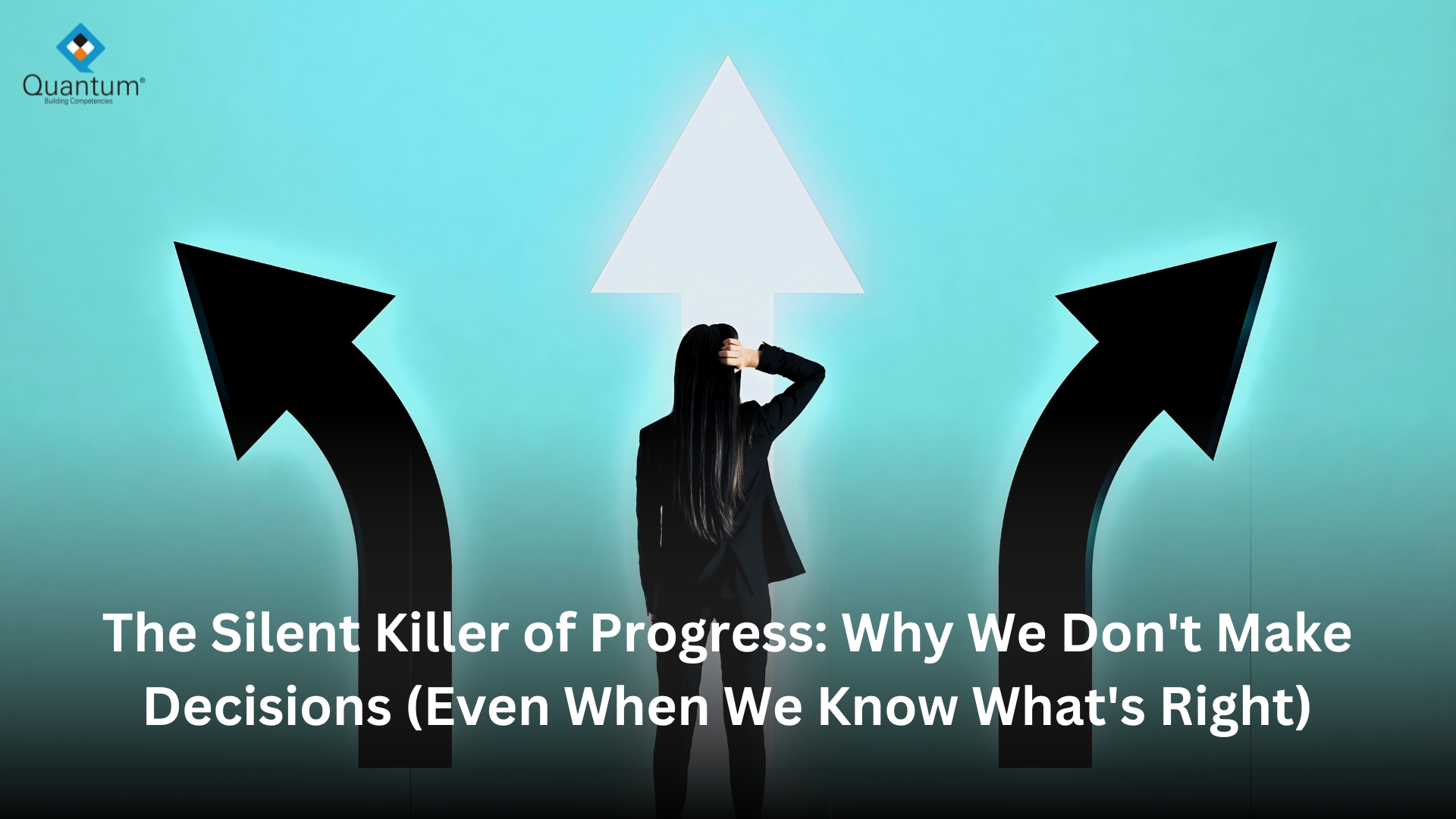
Why do smart people stay away from making decisions?
Companies don’t have a problem with intelligence; they have a problem with emotional strength.
Making decisions isn’t a reasonable thing to do. It’s a test of fear, ego, and memory in your mind.
I wrote the following in my book, “Navigating Through Emotions”:
“Every decision that is put off is based on an emotion that hasn’t been dealt with, like fear, guilt, or the need to stay in control.”
So, let’s figure out what’s going on emotionally when people don’t make decisions.
1. The Fear of Failure: “What if I’m Wrong?”
In most organisational cultures, failure is seen as a stain, not a stepping stone.
Leaders are afraid to make a decision because they think that making the wrong choice will show how good they are at their jobs.
Manager A: “Let’s try this out.”
Manager B: “What if it doesn’t work?”
Manager A: “Then we’ll learn.”
Manager B: “No one gets a rise for learning.”
I talked about this way of thinking in Culture Drives Strategy:
“Cultures that praise success but punish mistakes by accident make people unsure.”
What happened? People spend more time trying to avoid responsibility than trying to make a difference.
2. Not taking responsibility—”Let Someone Else Decide.”
Having something sounds great until you have to take care of it.
That’s why you regularly hear things like:
“Let’s make a committee.”
“We’ll come back to this after we align.”
“We’re waiting for permission.”
“I don’t want to be the one who gets blamed if this goes wrong.”
As I said in Navigating Through Emotions:
“Not taking responsibility is not being lazy; it’s protecting your feelings. People stay safe from pain by avoiding taking on the danger.
But when everyone looks out for themselves, the group stops looking out for its future.
3. Fear of Judgment—”What Will People Think?”
We don’t realise how much the urge for affirmation affects how businesses act.
In cultures where politics or hierarchy are more important, people don’t make decisions; they just follow orders.
They think too much, ask too many people for advice, and trust authority too much.
Because being mistaken in front of other people is worse than being trapped quietly.
As one executive said to me at a workshop,
“It’s better to be part of a bad choice that everyone makes than a brave choice that only one person makes.”
That’s not a strategy; that’s following the crowd.
4. The Ghosts of Bad Things That Happened in the Past
A leader is most paralysed by a past failure that they didn’t fix.
That memory stays imprinted when someone made a bold call that didn’t work out and was humiliated, chastised, or pushed to the side.
The next time you have to make a choice, your mind will say:
“Do you remember last time? Don’t do that again.
In Navigating Through Emotions, I talked about how
“Unprocessed emotional experiences create invisible decision barriers.” We think we’re being logical, but we’re really being protective.
That’s why emotionally intelligent leadership isn’t about hiding feelings; it’s about seeing how they affect our thinking.
The Price of Avoidance
When fear makes people make decisions, organisations go through:
Analysis paralysis means having a lot of data but not doing anything with it.
Culture of blame—more pointing fingers than moving ahead.
Loss of creativity—people stop coming up with new ideas.
Talent drain: the smartest people depart because nothing changes.
I wrote:
“Any strategy will fail in a culture that values safety over bravery.”
The funny thing is?
The fear of failing inevitably leads to the failure that everyone was attempting to avoid.
Scene 2: The Change
“We’ve been talking about this for months,” the CEO said. What’s keeping us from doing it?
Team Lead: “To be honest? We’re worried it might not work.
CEO: “Okay. That indicates you should give it a shot.
Leaders have to give people emotional permission to fail in a safe and meaningful way for decisions to move ahead.
How to Get Out of the Cycle
This is where you should start if you or your organisation wish to quit putting off decisions:
Give the Fear a Name.
Ask yourself, “What feeling is stopping this?”Fear loses half its potency once it is named.
Change what failure means.
Failure is not the opposite of success; it is a part of it.
Give rewards for being responsible, not just for getting things done.
Be proud of your bravery in making a choice, even if it doesn’t turn out perfectly.
Make the Past Better.
Talk about what you learnt from bad actions in the past, not who was to blame.
Show how to be emotionally open.
When leaders say they don’t know, teams feel safe taking charge.
The Emotional Edge
In the end, choosing decisions is like looking in a mirror; it shows how comfortable we are with danger, weakness, and mistakes.
As I said in Navigating Through Emotions:
“Leaders who can handle uncertainty without losing their cool make the best choices.”
And in Culture Drives Strategy:
“A culture that values emotional courage over control makes organisations that are flexible and able to make decisions.”
Last Words
When you hesitate again, ask yourself:
“Am I waiting for things to get clearer, or am I just avoiding pain?”
Being a leader doesn’t mean always being right; it means having the courage to make decisions when they matter.
© Dr. Pratik P. SURANA (Ph.D.)
Quantum Group.