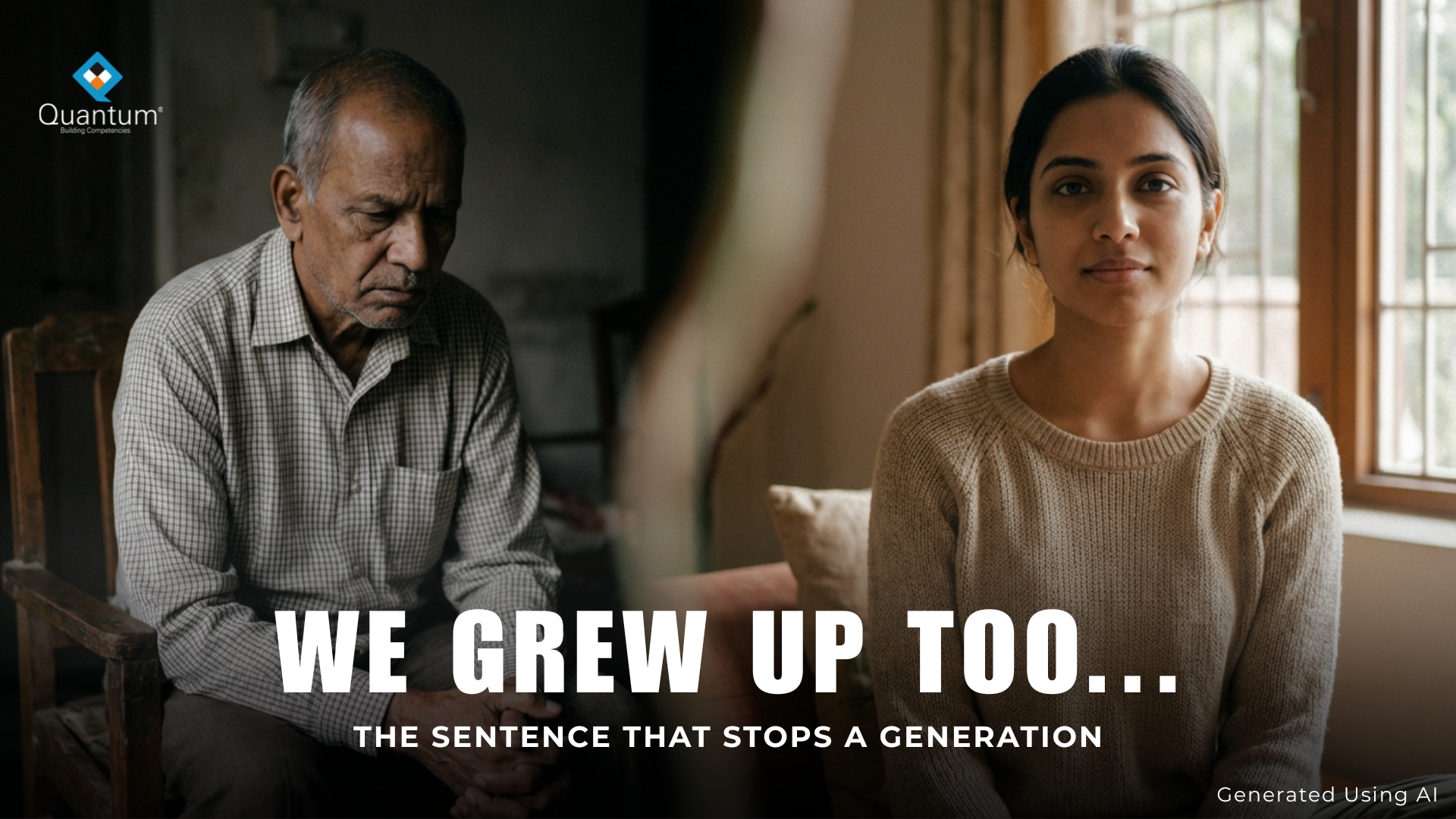
“Papa, I think I need to see a therapist. I’ve been worried.
The father glances up, confused and a little hurt.
“Therapy? “ We never needed any of this in our time. We also got older, right?
Almost every young person has heard this sentence.
And practically every older person has said it with pride, conviction, and not much thought about what it truly means.
But let’s break this down.
Did they truly not have any problems growing up? Or did they grow up not being allowed to talk about them?
In my books “Navigating Through Emotions” and “Mastering Emotional Intelligence,” I talk a lot about emotional suppression. This is the quiet, unseen baggage that many people carry since society never allowed them safe places to express themselves.
The older generation wasn’t stronger.
They just didn’t say anything.
Not because they didn’t hurt.
But they weren’t authorised to hurt.
At that time, feelings weren’t things to talk about; they were things that got in the way.
Anxiety was “overthinking.”
“Laziness” was depression.
Abuse was a “family issue.”
“Adjust and move on” was trauma.
So when they proudly remark, “We didn’t have these problems,” what they really mean is, “We never had the freedom to admit them.”
The Illusion of Strength
Let’s say a young woman is talking to her grandmother:
Aanya: “Nani, we are extremely stressed out right now. It feels like everything is heavy.
Nani: “Oh, we had to deal with so much hard stuff back then. We didn’t fall apart like this.
Aanya: “Maybe you never got to talk about how much it hurt.”
Nani stops…
Nani: “Back then, people weren’t allowed to talk.”
There it is: the truth behind the illusion.
The older generation wasn’t harder on the inside.
They were not emotionally recognised.
I wrote in “Mastering Emotional Intelligence”:
“Being quiet isn’t being strong. It is survival that looks like strength.”
A lot of what they call resilience is really emotional numbing, which means shutting down feelings because it was unsafe or embarrassing to admit them.
Social Taboos Changed How They Felt
Let’s not forget the world they grew up in:
There was no way to talk about mental health.
There was no talk of abuse.
People thought anxiety was a sign of weakness.
To safeguard “family honour,” trauma was kept a secret.
Gender roles kept people from being able to express themselves.
Money problems made feelings a luxury.
In “Navigating Through Emotions,” I talked about this time as
“A generation that lived through storms but never learnt how to talk about the rain.”
They were taught that being excessively emotional makes you weak.
And now when the younger generation speaks the emotional language they never learnt, they think it’s a sign of “lack of maturity.”
The New Generation Isn’t Weak; It’s Smart
Young folks nowadays aren’t breaking; they’re letting go.
They aren’t emotionally weak; they know how to deal with their feelings.
They don’t lack resilience; they won’t let trauma become normal.
They are changing harmful patterns that have been passed down through generations by:
going to therapy,
imposing limits,
being honest about mental health,
instead of hiding them, dealing with emotional traumas,
and picking being real over being quiet.
This isn’t a sign of weakness; it’s a sign of progress.
Just because people in the past didn’t complain about their pain doesn’t mean that silence is strong.
They just carried unresolved feelings into maturity, marriage, and motherhood, and frequently didn’t even know they were doing it.
As I said in “Mastering Emotional Intelligence,”
“Trauma that hasn’t healed doesn’t go away; it changes who you are.”
Why the Sentence Hurts
“We also grew up, but we never had to deal with stuff like this.”
This sentence says no to two things:
The pain they never admitted to feeling.
The emotional truth that the younger generation boldly faces.
When older people say this, they think that mental health problems didn’t exist previously, yet they did. They were just buried under:
fear,
shame,
duty,
what society expects of you,
and the ongoing need to “adjust.”
The younger generation is not against being strong.
They’re changing it.
Being truly strong means not hiding your emotional wounds.
It takes bravery to mend them on purpose.
Bridging the Gap Between Generations of Emotions
The point isn’t to put the blame on the older generation.
To comprehend them and facilitate their understanding of us.
This is the message I wish all sides could agree on:
To the older generation: Yes, you were strong. But you also kept your pain to yourself. Your experiences are important too. It’s not humiliating to heal; it’s human.
To the younger generation: Your awareness is what makes you strong. People who don’t believe you when you say you’re hurt don’t make it less real. Keep choosing to heal.
I wrote in “Navigating Through Emotions”:
“To heal is not to disrespect the past.” It is changing the future.
If someone has ever said to you, “We never had these problems,”
Keep this in mind: Someone may not have talked about their wound, but it doesn’t imply they didn’t have one.
Every generation has its own emotional story to tell.
The older one held it without saying anything.
The younger one knows how to carry it.
And what breaks cycles is not silence, but consciousness.
What helps families get better.
What makes generations more emotionally healthy.
© Dr. Pratik P. SURANA (Ph.D.)
Quantum Group.
#EmotionalIntelligence #MentalHealthMatters #GenerationalHealing #BreakingTheCycle #LeadershipWithEmpathy #QuantumGroup #DrPratikSurana