Scene 1:
The Sharma & Sons Pvt. Ltd. boardroom on Monday morning
Arjun, the son, said, “Dad, I think we should go digital and put money into e-commerce, modern branding, and automation.”
Mr. Sharma, the father, said, “Beta, our customers love the personal touch.” We don’t need all this nice stuff.
Arjun said, “But Dad, our competitors are growing faster because they are keeping up with the times!”
Mr. Sharma: “We haven’t needed it for 30 years.” “Don’t fix what’s not broken.”
Three years later, their rival buys them out.
The Control Paradox
The funny thing is that most family-owned small and medium-sized businesses started out of bravery, risk-taking, and a vision.
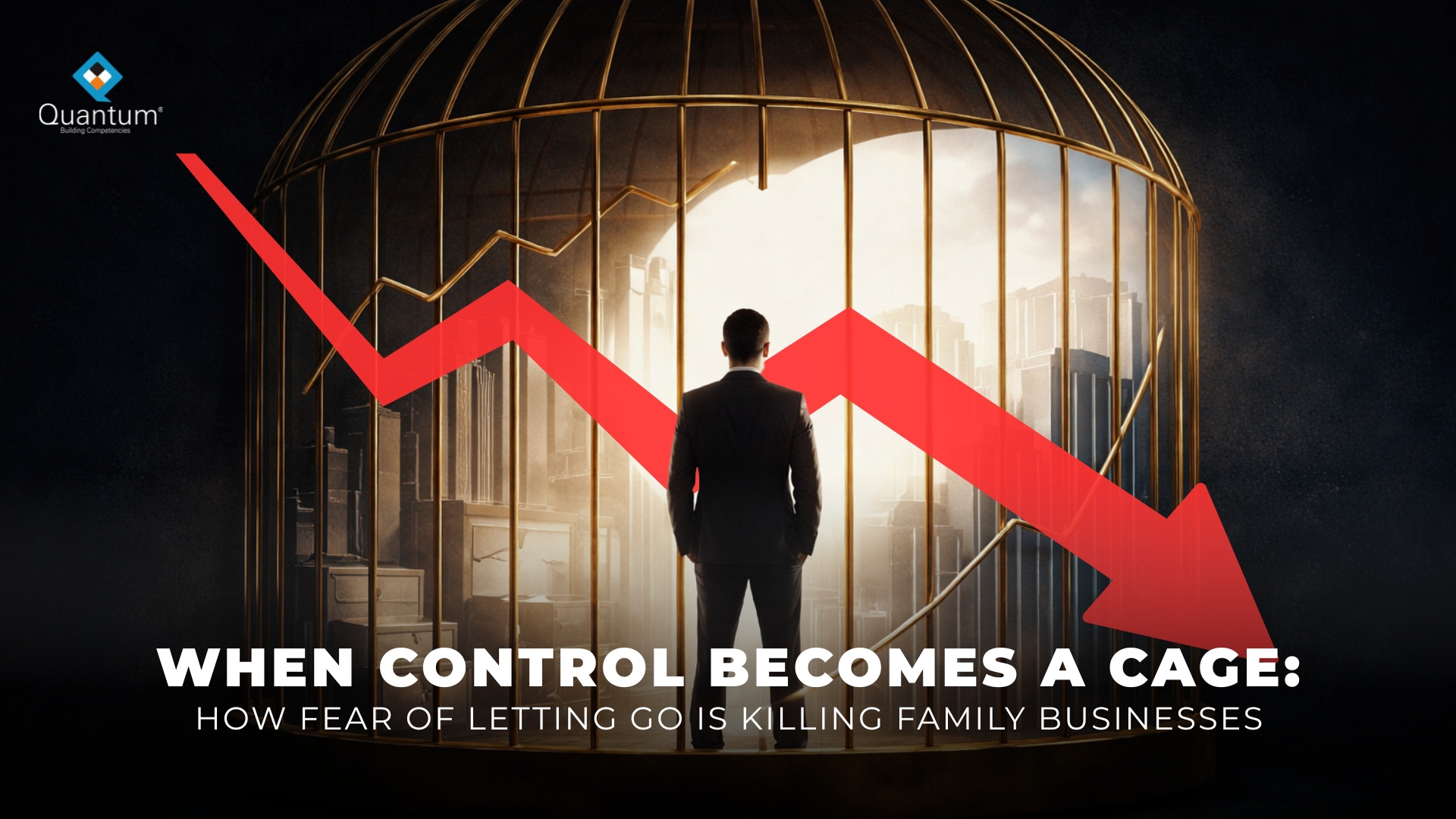
But when success comes, so does the fear of losing control, which is the quiet virus that spreads through decision-making.
I wrote in my book Culture Drives Strategy:
“Control feels safe to those who built the empire, but to those who are supposed to inherit it, control feels like being trapped.”
That’s the sad thing about enterprises that are based on legacy.
The founders, who were deeply afraid of losing what they had achieved, unwittingly created a culture of fear and hesitancy.
And that culture, not the rivalry, is what does them in.
Scene 2:
The Emotional Boardroom
“Dad, we need to branch out into eco-friendly products,” said my daughter, who has an MBA from London.
Dad: “You’ve read too much theory.” You don’t do business with books; you do it with your intuition.
Daughter: “But sustainability is the new way to grow!”
Dad: “You think you know more than I do?”
Daughter: Sighs and gives up without saying anything.
The boardroom becomes an emotional battleground, with a mix of love, ego, protection, and terror.
As I said in Navigating Through Emotions,
“Most decisions made by leaders are emotional choices that look like rational ones.” Fear of loss, not rationality, is what usually makes people resistant.
The Mindset of “Not Letting Go”
We all know that letting go is hard. It can be hard to let go, especially when your name is on the door, the loan paperwork, and the company’s history.
For a lot of first-time business owners, control isn’t just about power; it’s also about who they are.
Giving up control over decisions makes people feel like they are losing a part of themselves.
But here’s the psychological trap: The more they cling on, the less the following generation feels like they can trust them.
And the less they feel trusted, the less they feel like they own something.
In a culture of obedience, invention dies silently before long.
As I said in Mastering Emotional Intelligence,
“Real leadership isn’t about being in charge; it’s about knowing when to let go and trust.”
Decision Paralysis: How Great Companies Die Slowly
When fear controls leadership, it causes:
Meetings that go on forever with no decisions.
“Let’s wait and see” attitudes.
Instead of learning from mistakes, punishing them.
Not accepting concepts that weren’t “ours.”
A lot of small and medium-sized businesses don’t fail because of faulty strategy; they fail because they can’t make up their minds.
You’ll often hear the same thing:
“We’ll look into it next quarter.”
“We need more information.”
“Let’s wait until the market settles down.”
“We’re afraid to change.”
And by the time they’re ready, the world has already moved on.
Scene 3:
The Big Change
Father: “I started this business from scratch.” I can’t take that chance.
Son: “You took a big risk once, and that’s why we’re here now. Allow me to do the same.”
That’s the tension between generations in one line.
The founders were afraid of failing, and the new generation is afraid of not moving forward.
They both want to be successful, but they have different ideas of what that means.
One wants things to stay the same, while the other wants them to be able to grow.
One person believes in tradition, while the other believes in change.
The business will be in neutral until both of them learn to connect on an emotional level beyond the “my way vs. your way” story.
Helping Family Businesses Grow Up Emotionally
Family businesses need to move away from cultures centred on control and towards systems based on trust if they wish to last past one generation.
Here’s how:
– Recognise that control comes from emotions.
It’s normal to be afraid of losing control; don’t deny it.
– Make safe places where people can try new things.
Let the next generation fail small before they succeed large.
– Separate ownership from leadership.
A last name offers you a legacy, but not always the freedom to choose.
– Make emotional deals, not just business ones.
As I said in Navigating Through Emotions,
“Trust is the emotional currency that keeps organisations going when logic fails.”
Don’t watch, mentor.
Teach them the rules, but let them figure out how to follow them.
Culture > Control
The family businesses that last through the generations aren’t the ones that made the best product; they’re the ones that were smart enough to change with the times.
I stressed the following in Culture Drives Strategy:
“The real culture of a business isn’t shown by how fast it grows, but by how it handles change.”
The new generation doesn’t need to ask for permission; they need to be involved.
And the elder generation doesn’t need to get out of the way; they just need to move back a little so that others can move forward.
Last Thought
The question for every family business isn’t “Will my kids keep what I built?”
“Have I created a culture that lets them dream bigger than me?”
Because in the end, control will slip away, either on purpose or over time.
What you facilitated, not what you owned, is what really matters.
And as I tell leaders in Mastering Emotional Intelligence:
“When leaders give up control, they don’t lose power; they gain power.”
So the next time you want to say,
“Let me choose,”
Stop and ask instead,
“What will they learn if I let them choose?”
That one change can turn a family business from a dynasty of control into a legacy of trust.
© Dr. Pratik P. SURANA (Ph.D.)
Quantum Group.