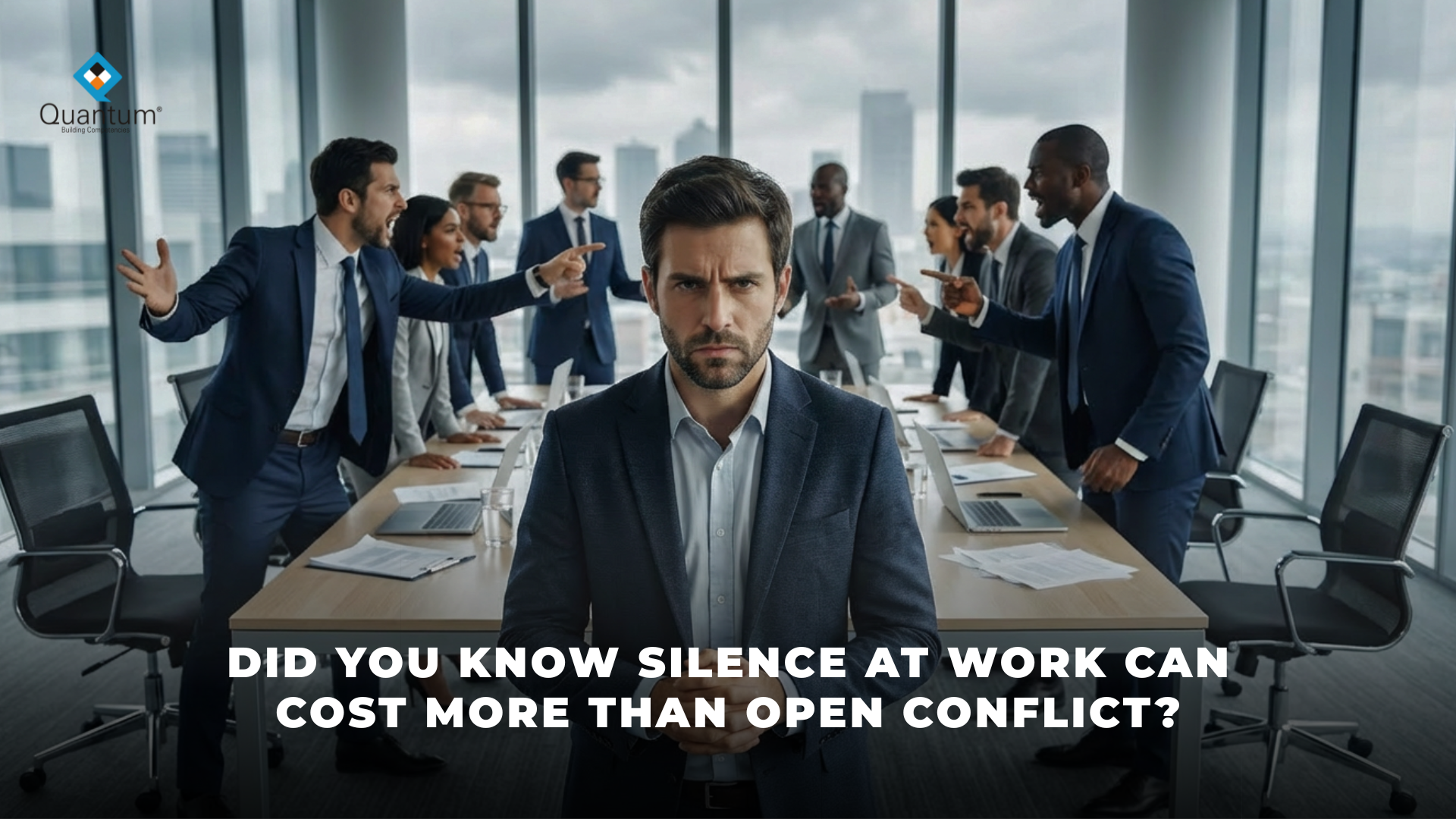
There are two types of silence in every organisation.
One comes from being focused.
The other comes from emotional withdrawal.
The second type is risky.
Stonewalling at work, which is when employees stop talking about their worries, feelings, or feedback, has become a silent epidemic. And even though a lot of leaders think this, it’s not usually an attitude problem.
It’s a problem with feelings.
In my books Navigating Through Emotions and Mastering Emotional Intelligence, I stress over and over that people don’t stop talking because they don’t have anything to say.
They cease because they think it doesn’t matter.
A Typical Conversation at Work
Manager: “Why didn’t you tell me this sooner? “
Employee: “I didn’t think it would matter, and I didn’t want to have to explain myself again.”
Or a different version—
Employee: “You won’t understand.”
“At least try,” said the manager.
Employee: “I have done it before.” It didn’t make a difference.
This is not resistance.
This is learnt quiet.
The Psychology of Stonewalling at Work
Stonewalling is not a form of revolt.
It protects your feelings.
Employees often cease talking to each other because:
1. They believe the listener is biased
According to research by Deloitte, 61% of workers think their bosses already have opinions about them, usually based on mistakes they’ve made in the past or labels they’ve been given.
People pull back when they feel judged.
2. They believe the other person doesn’t get it.
According to a survey in the Harvard Business Review, 64% of workers don’t speak out about their problems because they think bosses “won’t get it.”
It’s not about skill; it’s about being emotionally disconnected.
3. They have tried before and felt unheard
Gallup says that only 30% of workers think their opinions matter at work.
People quit talking after a few tries that don’t work.
4. They are afraid of what will happen.
Fear of being misunderstood, condemned, or punished makes people emotionally withdraw.
Silence turns into a way to protect yourself.
In Navigating Through Emotions, I call this “emotional disengagement caused by repeated invalidation.”
Stonewalling Isn’t Being Lazy—It’s Not Wanting to Talk
Hope is necessary for communication.
Hope that the other person will hear, comprehend, or do anything.
When hope dies, communication stops.
You can’t see this on performance dashboards, but you can see it in little actions:
Quick responses
Not talking about things
Responses that say “It’s fine”
Taking too long to deal with problems
Communication that makes sense but is chilly emotionally
Not sharing ownership or context
In Mastering Emotional Intelligence, I call this state “communication fatigue.” This is when people would rather remain quiet than explain themselves because they are so emotionally drained.
Why Leaders Need to Listen?
Stonewalling isn’t just a problem between people.
It is a risk factor for the organisation.
1. 25% less productive
The global workplace study by Microsoft concluded that bad communication makes teams much less effective.
2. Collaboration turns into a business deal
Teams go from working together to merely getting things done.
3. Conflicts become hidden, not solved.
Avoiding things makes the cracks bigger and more hazardous.
4. More people leave their jobs with talent
The Workplace Empathy Report says that 54% of workers quit their jobs, not their firms, because they don’t feel heard.
Silence costs a lot.
The Leadership Shift: Creating a Place Where People Can Speak Up
In all of my books, I stress that emotional intelligence, especially empathy and listening, is the most important skill for leaders in the future.
1. Make people feel protected in their minds
People talk when they feel safe, not when someone tells them to.
Google’s Project Aristotle concluded that the most important factor for high-performing teams is psychological safety.
2. Practice listening with empathy and attention.
Listening isn’t just waiting for your turn to talk.
It is letting the other person know that you hear them and care.
Simple actions are helpful:
“Tell me more.”
“Please help me see things from your point of view.”
“Please explain it to me step by step.”
“I want to see this from your point of view.”
3. Get rid of the idea of prejudice
People stop working when they feel judged.
Open communication and clear feedback methods help to lower this bias impression.
4. Don’t react; respond.
The first time a leader hears anything, how they respond will determine if there will be a second.
5. Encourage vocabulary about feelings
People talk to each other better when they can name their feelings.
This is a key idea in Mastering Emotional Intelligence.
Why You Should Be Open and Talkative?
Communication is more than just fixing problems.
It makes:
– Faith
– Relationships that matter
– Working together
– Responsibility
– New Ideas
– A culture of openness
In the moment, it may seem easier to stay quiet, but over time it hurts morale and relationships.
Being open helps workers feel:
– Important
– Able to be seen
– Got it
– Connected on an emotional level
– Driven
And leaders who listen with empathy make better choices, establish stronger teams, and avoid fights that don’t need to happen.
Emotional openness is important for relationships at work.
Businesses run on relationships, and relationships grow when people talk to each other.
Relationships get weaker when communication stops.
Teams fall apart when relationships get weaker.
And even the best plans fall apart when teams break apart.
Stonewalling is a sign.
The main problem is that people are not emotionally connected.
In my book Navigating Through Emotions, I write:
“People don’t stop talking to each other because they are hard to deal with.”
They stop talking because they think the other person doesn’t care about their feelings.
The answer is simple:
– Understanding.
– Paying attention.
– Understanding without judging.
– Making room for people to talk about their feelings.
Last Thought
What leaders say does not make up an organization’s culture.
How leaders listen makes it happen.
And when workers stop wanting to talk to each other, the culture starts to fall down- quietly, invisibly, and frequently for good.
We don’t need extra instructions if we want teams that do well.
We need to talk more.
And most importantly, we need leaders who pay attention.
© Dr. Pratik P. SURANA (Ph.D.)
Quantum Group.
#Leadership #EmotionalIntelligence #WorkplaceCulture #PsychologicalSafety #EmployeeEngagement #QuantumGroup